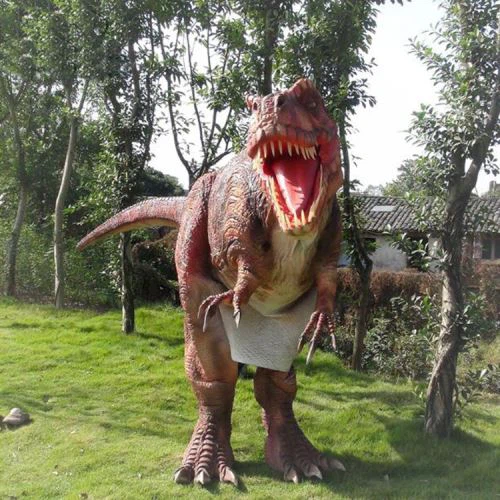
As a leading supplier of animatronic dinosaurs, I've often been asked about the minimum space required for these magnificent creatures. It's a crucial question, especially for clients planning exhibitions, theme parks, or educational displays. In this blog, I'll delve into the factors that determine the space needed for animatronic dinosaurs and provide some guidelines to help you make informed decisions.
Factors Affecting the Space Requirement
1. Size of the Dinosaur
The most obvious factor is the physical size of the animatronic dinosaur. Dinosaurs came in a wide range of sizes, from the tiny Compsognathus, which was about the size of a chicken, to the massive Argentinosaurus, which could reach lengths of up to 100 feet or more. When creating animatronic replicas, we strive to maintain the same scale and proportions as the real dinosaurs. Therefore, larger dinosaurs will naturally require more space.
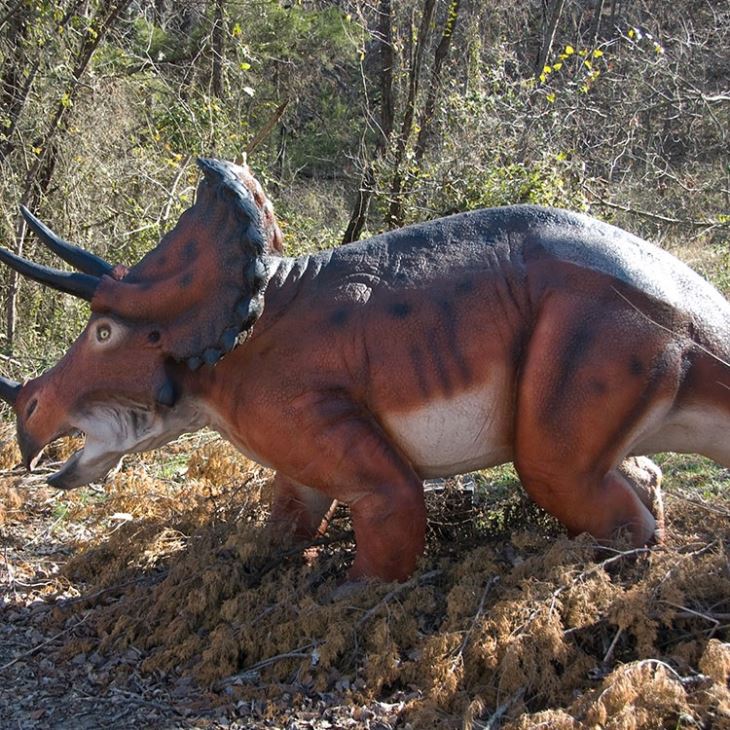

For example, a T-rex Animatronic Dinosaur can be up to 40 feet long and 20 feet tall. To display such a large animatronic effectively, you'll need a space that allows visitors to view it from all angles without feeling crowded. A general rule of thumb is to provide at least a 10 - foot buffer zone around the dinosaur to ensure safety and a comfortable viewing experience.
2. Movement Range
Animatronic dinosaurs are designed to mimic the movements of their prehistoric counterparts. Some dinosaurs, like the T - rex, had a relatively limited range of motion, mainly moving their heads, jaws, and tails. Others, such as the Brachiosaurus, could sway their long necks in a wide arc. The movement range of the animatronic will determine how much space it needs to operate safely.
If the dinosaur has a large movement range, you'll need to provide enough space to prevent it from hitting walls, other exhibits, or visitors. For example, a Simulation Animatronic Dinosaur Model of a Stegosaurus with a tail that can swing back and forth will require a wider area than a static display.
3. Access for Maintenance
Regular maintenance is essential to keep animatronic dinosaurs in good working condition. Technicians need to be able to access the internal components of the animatronic, such as motors, sensors, and wiring. This means that there should be enough space around the dinosaur to allow maintenance personnel to work comfortably.
A minimum of 3 - 5 feet of clearance around the animatronic is recommended to provide easy access for maintenance. This space can also be used to store spare parts and tools.
4. Visitor Flow
The flow of visitors is another important consideration. You want to ensure that visitors can move around the animatronic without getting stuck or causing congestion. A well - designed layout will encourage a smooth and continuous flow of traffic.
Consider the number of visitors you expect to attract and the direction in which they will move through the display area. Provide enough space for queues to form if necessary, especially for popular exhibits. A good practice is to design the space so that visitors can approach the animatronic from multiple directions, which helps to distribute the crowd evenly.
Space Requirements for Different Types of Animatronic Dinosaurs
1. Small - Sized Dinosaurs
Small - sized animatronic dinosaurs, such as the Velociraptor or the Microraptor, typically require less space. These dinosaurs are usually less than 10 feet long and can be displayed in a relatively compact area.
For a single small - sized animatronic, a space of about 150 - 200 square feet may be sufficient. This includes the area occupied by the dinosaur itself and a small buffer zone for viewing. If you plan to display multiple small - sized dinosaurs together, you'll need to increase the space accordingly.
2. Medium - Sized Dinosaurs
Medium - sized dinosaurs, like the Allosaurus or the Parasaurolophus, are usually between 10 and 30 feet long. These animatronics require a larger space to accommodate their size and movement range.
A medium - sized animatronic will typically need a space of 300 - 500 square feet. This allows for a comfortable viewing distance and enough room for the dinosaur to move without restrictions. If you want to create a more immersive display, you can add additional elements such as scenery or interactive features, which will further increase the space requirement.
3. Large - Sized Dinosaurs
Large - sized dinosaurs, such as the T - rex or the Brachiosaurus, demand a significant amount of space. As mentioned earlier, these animatronics can be very large and have a wide range of motion.
For a large - sized animatronic, you'll need a space of at least 800 - 1500 square feet or more. This includes the area for the dinosaur, a buffer zone for viewing, and space for maintenance and visitor flow. If you plan to display multiple large - sized dinosaurs in the same area, you'll need to calculate the space requirements based on the total size and movement range of all the animatronics.
Creating an Optimal Display Space
To create an optimal display space for animatronic dinosaurs, it's important to plan the layout carefully. Here are some tips:
- Measure the Available Space: Before choosing an animatronic dinosaur, measure the space where you plan to display it. This will help you determine the maximum size of the animatronic that can fit comfortably.
- Consider the Layout: Design the layout of the display area to maximize the viewing experience. Use barriers or ropes to guide the flow of visitors and create a clear path around the animatronic.
- Add Scenery and Lighting: Scenery and lighting can enhance the overall atmosphere of the display. Use rocks, plants, and artificial water features to create a realistic prehistoric environment. Lighting can be used to highlight the features of the animatronic and create a more dramatic effect.
- Test the Movement: Before the official opening of the display, test the movement of the animatronic to ensure that it has enough space to operate safely. Make any necessary adjustments to the layout or the movement range of the animatronic.
Conclusion
Determining the minimum space required for an animatronic dinosaur depends on several factors, including the size of the dinosaur, its movement range, access for maintenance, and visitor flow. By considering these factors and following the guidelines provided in this blog, you can create a safe and engaging display that showcases these amazing creatures.
If you're interested in purchasing an Animatronic Robot Dinosaur for your exhibition, theme park, or educational display, we're here to help. Our team of experts can provide you with detailed information about the space requirements for different animatronic dinosaurs and assist you in creating the perfect display. Contact us today to start the procurement process and bring the prehistoric world to life!
References
- "The Complete Dinosaur" by David B. Weishampel, Peter Dodson, and Halszka Osmólska.
- "Dinosaurs: The Most Complete, Up - to - Date Encyclopedia for Dinosaur Lovers of All Ages" by Thomas R. Holtz Jr.