


Zigong Boyun Culture Communication Co., Ltd. is a 20-year-old team dedicated to festival lantern festivals, simulation dinosaurs and cartoon sculptures. As a creative and innovative company that keeps innovating and advancing with the times, we rely on professional talent development. Team, leading industry development technology, rich personal combat experience, effective team management methods, using the most unique perspective, the most open thinking to create an unprecedented lantern art product for customers.
Why Choose Us
100% Satisfaction Guarantee
We're so confident you'll be happy with our services, we guarantee it.
Extensive Experience
Our team of professionals have been in the business for quite some time. Let us deliver solutions that work the first time!
Fair & Competitive Pricing
Our pricing structure is designed to make a modest profit so that we can continue to be a Hero another day.
-
![Highly Life-like And Emulational Dinosaur Skeleton]() Highly Life-like And Emulational Dinosaur SkeletonDinosaurs are very large overall. Judging by the dinosaurs, the lizard feet are the giants. In the long dinosaur era, even the smallest sauropod dinosaurs were larger than other animals in their...
Highly Life-like And Emulational Dinosaur SkeletonDinosaurs are very large overall. Judging by the dinosaurs, the lizard feet are the giants. In the long dinosaur era, even the smallest sauropod dinosaurs were larger than other animals in their... -
![Attraction Dinosaur Skeleton For Museum]()
-
![Dinosaur Skeleton Model]() Dinosaur Skeleton ModelCan your products be customized ?
Dinosaur Skeleton ModelCan your products be customized ?
Yes ,all of our products can be customized according to your request ,such as lantern type ,size ,color ,movements etc . -
![Dinosaur Fossils Model]() Dinosaur Fossils ModelAre you trading company?
Dinosaur Fossils ModelAre you trading company?
No, we are leading professional factory with over 10 years industry experience. -
![Dinosaur Fossils Eggs Statue]() Dinosaur Fossils Eggs StatueWe are professional manufacture of all kinds of Animatronic Products, such as animatronic dinosaurs & animals, fiberglass dinosaurs & dinosaur skeletons, cartoons & dinosaur costumes.
Dinosaur Fossils Eggs StatueWe are professional manufacture of all kinds of Animatronic Products, such as animatronic dinosaurs & animals, fiberglass dinosaurs & dinosaur skeletons, cartoons & dinosaur costumes. -
![Artificial Life Size Dinosaur Skeleton]() Artificial Life Size Dinosaur SkeletonWe have professional design team, all your design requirements could be meet before you place the order.We offer graphic design, layout design, 3D modeling design, 3D animation design.
Artificial Life Size Dinosaur SkeletonWe have professional design team, all your design requirements could be meet before you place the order.We offer graphic design, layout design, 3D modeling design, 3D animation design. -
![Replica Dinosaur Fossils]() Replica Dinosaur FossilsOur dinosaurs’ species, size, color, movements and sound can be customized as your personalized requirements. What’s more, other simulation animals or dinosaur skeletons also can be customized.
Replica Dinosaur FossilsOur dinosaurs’ species, size, color, movements and sound can be customized as your personalized requirements. What’s more, other simulation animals or dinosaur skeletons also can be customized.


Promotes Curiosity and Exploration
Children in the dinosaur phase are naturally curious about the world around them. They ask the big questions, seek answers, and investigate new ideas. Naturally, this leads to stimulating learning experiences as they read and discover how dinosaurs lived, what they ate, and how they evolved over their 165 million year reign on Earth.
Enhanced Language Development
As children learn about dinosaurs, they’re exposed to an extensive vocabulary related to science, history, and palaeontology. Although they may not understand all of these phrases, just pronouncing them is a phonetic exercise that may lead to a better understanding of written and spoken words.
Learning to pronounce terms like ‘tyrannosaurus rex,’ ‘herbivore’ and ‘fossilisation’ create new neural pathways and stimulate cognition. This exposure to new words and concepts can help them develop language skills, improve communication, and expand vocabulary.
Make New Friends
If your toddler is going through the dinosaur phase, chances are there are many others in their childcare room, kinder, or family friends on the same journey. You can use this shared fascination to organise playdates for your child to make new friends!
Sparks Creativity and Imagination
By its very nature, the dinosaur phase requires imaginative play. As dinosaurs no longer exist, they naturally encourage creativity and fascination for children. This is likely because of their likeness to fictional creatures such as dragons.
You can use this fascination to encourage all kinds of creative dinosaur activities. They might draw pictures, build models, or flex their dinosaur muscles by pretending to be a humble brontosaurus or a terrifying t-rex. Likewise, this imaginative play develops creativity and encourages abstract thinking.
Puts Time and History into Perspective
At around age 4-5, children begin to understand that the world existed long before they did. Additionally, they learn that our history is fascinating and complex. Therefore, the dinosaur phase perfectly introduces children to this concept in a fun and accessible way.
Children learn about an entirely different world with its own creatures and ecosystem over 66 million years ago – the number itself enough to spark wonder and awe.
It’s sometimes said that palaeontologists are grownups that never grew out of the dinosaur phase. An early fascination with science can lead to careers in archaeology, geology, meteorology, and environmental sciences!
Promotes a Love of Nature and the Environment
As children learn about dinosaurs, they also learn about the environment they lived in and the impact that humans have on the planet today. This can help them develop a sense of responsibility for the natural world and a desire to preserve it.
Overall, the dinosaur phase is so much more than just a passing fad. It’s an opportunity for your child to express their creativity, independence, and foster a lifelong love of science and the natural world. So be sure to encourage their interest in dinosaurs by reading books, visiting museums, and engaging in imaginative play. Who knows, your child might grow up to discover the next dinosaur species.
What Is Dinosaur Skeleton
Although dinosaur skeletons differed depending on the type of dinosaur, they all were vertebrates with a spine, and their tails were made up of many small bones called vertebrae. Not only did tails give dinosaurs balance, they were a built in weapon.
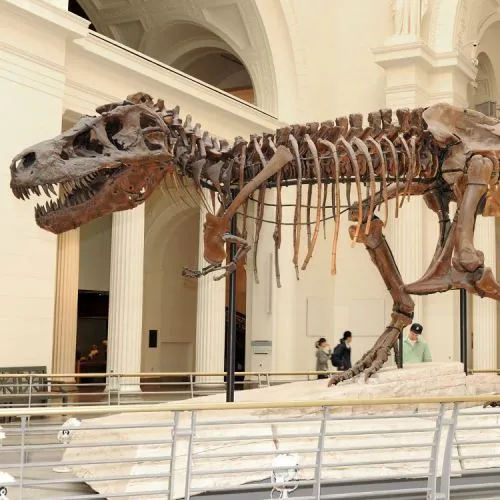
Well, say you had your own dinosaur, first you’d have to bury it in layers and layers of dirt. Then, make sure there are no pockets in the sediment where air and water can reach the rock, and then wait tens of thousands of years. Voilà! You have dinosaur skeleton bones and teeth!
Now, no one has tens of thousands of years to wait around, or a dinosaur skeleton for that matter. But, even if you made a time machine and traveled back in time to the Jurassic period to find a dinosaur and give it time to dinosaur skeleton, something could still go wrong. The bones could be too fragile, destroyed by air or water, or uncovered too early.
So, the bad news is it’s really hard to make your own real dinosaur skeletons. But don’t worry! Our paleontology enthusiasts at Orlando Science Center have put together a DIY experiment to make your own dinosaur skeletons at home with items you already have in your kitchen!
In museums across the world you can go see dinosaur skeletons, scattered bones reassembled into their original forms of a roaring Tyrannosaurus or a lumbering Sauropod. It’s one thing to see a dinosaur skeleton, but it is quite another to hold one in your hand. Here are the best tips for purchasing a dinosaur skeleton to add to your personal collection.
● First things first, you have to know where to buy from. Dinosaur dinosaur skeletons can be sold at specialty stores or trade shows, usually close to the big dig sites in the United States, mostly in the Southwest.
If that's a bit of a trek for you, there are also many online vendors to choose from that sell dinosaur skeletons. When purchasing online, it's important to ensure the seller is reliable and the artifacts are certified genuine. With auction sites like eBay and Etsy, it can be difficult to determine the legitimacy of the seller, so it's best to stick with specialist sites. You should always check to see if they have an about or authenticity page too. It's also good to see if they can share the area that the dinosaur skeleton came from.
● Once you have a seller you trust, the next question is what kind of dinosaur skeleton you want, and what you want to pay for it. Chances are you don’t have a spare 30 million in your monthly budget to buy a complete T-rex skull, but other specimens like teeth or dinosaur skeleton fragments are far more affordable, selling for twenty or thirty dollars. Dinosaur dinosaur skeletons are precious items, but there are new ones found every day by field paleontologists, meaning just about anyone can own a dinosaur skeleton.
So what kind of dinosaur skeleton do you want to own? Keep in mind dinosaur skeletons can come in many forms. A classic permineralized dinosaur skeleton is when minerals leach into an organism’s bones, replacing and preserving it with stone. A cast or mold retains the shape of the specimen, without actually preserving the form itself. A trace dinosaur skeleton may be a dinosaur skeletonized footprint, or some other mark left behind by the creature. There’s a lot of options to choose from.
● You’ll also want to keep in mind the different eras that dinosaur skeletons can come from. If you’re interested in dinosaurs, you’re going to want to focus on the Triassic, Jurassic, and Cretaceous periods. Dinosaurs emerged during the Triassic, but didn't come to dominate until the Jurassic, after the end Triassic extinction event. At this time, from 200-150 Mya, dinosaurs ruled the land, seas, and air. All together, the age of dinosaurs is called the Mesozoic and any dinosaur skeleton from this period is a real treasure.
● Most importantly is the question of the dinosaur itself. What dinosaur skeleton do you want to own? Some specimens are rarer than others, and their costs are prohibitively expensive. If you're just starting out, a small tooth can be the perfect entry point. A dinosaur tooth is a distinctive and easily identifiable specimen that can be purchased without breaking the bank. A single carnivorous dinosaur like Spinosaurus could grow dozens of teeth throughout its life, leaving behind many specimens to be had today.
● Once you have your dinosaur skeleton, caring for the specimen is very important. A dinosaur skeleton has survived millions of years to the present moment, but can still be damaged by neglect. You want a nice spot for displaying, but not anywhere the dinosaur skeleton can be damaged. Keep the specimen dry and clean. Remember to handle gently. A display case or stand is the perfect way to show off your new treasure!
Before buying a dinosaur skeleton, remember to think about what dinosaur you'd like to purchase and where you're buying it from. Check for dinosaur skeletons from trusted sources that can trace the dinosaur skeleton's origin. There are plenty of ways to start building up your collection of dinosaur skeletons right now and before you know it, you could have your very own museum lining a bookshelf of your home!
Ready to start your dinosaur hunt? Check out some of these dinosaur skeletons and browse our entire dinosaur skeleton collection below!
Buyers beware of dino-mania
Yet two auctions late last year have caused concern. That possible $25-million sale was halted after experts highlighted the number of replica bones included as part of the skeleton.
Using reproductions to complete skeletons is quite common. But buyers may have been scared because a few weeks later there was another major disappointment.
Authenticity, provenance and paperwork
Auction houses, dealers and specialty shops are trying to convince collectors and investors to look closer at natural history specimens like dinosaur skeletonized eggs, oversized teeth, meteorites, minerals or even strands of mammoth hair. Though they are not as eye-catching as a full-scale dino, they are still a part of history and in some cases quite rare.
The organism needs to undergo a rapid burial in an undisturbed fashion so that it is preserved and dinosaur skeletonized." Add to that a sense of adventure and the enormous amount of backbreaking work involved in finding and excavating such dinosaur skeletons and they become even more intriguing.
Quality, how well something is preserved and completeness are major factors to take into account. Authenticity, provenance and paperwork proving that a specimen was legally excavated are also important.
Seeing the beauty in old bones
Last year their auctions brought in over $1 billion for the first time, a 27% increase over the previous year. Of the total, around $4 million came from its 11 natural history auctions, three of which included dinosaur skeletons.

General introduction
Mounted in rust prevention inner/ outer steel frame with the material of thick fberglass. Our dinosaur skeletons feature in scientific proportion, artificial fossilized texture, and detailed cracks on bone. The postures and sizes can be customized according to your design. And they can not only be used in museums, the shipping centers, hotel lobbies, amusement parks, city plazas, cinemas, schools, movie props, and even showcases are all proper sites for displaying the dinosaur skeleton.
Animatronic dinosaur skeleton
Maybe you have never seen a moving dinosaur skeleton! Unbelievable? Yes, but it really did happen. The dinosaur skeleton is alive like the T-rex in the movie“NIGHT AT THE MUSEUM". Opening mouth with an angry roaring sound, turning head from left to right, at the same time, the tail is swaying. The animatronic dinosaur skeletons captivate you with incredible movements and extensive details. Comparing with the static skeletons, there is no difference in appearance because of the invisible wires and motors.
Fluorescent dinosaur skeleton
More unexpected is that our skeletons can shine in the dark. the whole skeleton structure is visible without any lights. How to achieve luminescence? The answer is hidden in the special material covered on the bones. What is the material? Let's keep it a secret BTW, the animatronic fluorescent skeleton was created by our technicians last year.
Golden skeleton, Silver skeleton
Do you still remember the Natural History Museum-themed window displays of LV? Gold dinosaur skeletons feature in-store winders, unveiled June 14. Seven gold dinosaur skeletons feature in store windows, to showcase the Pre- Fall/Winter 2013-2014 collection, All these golden dinosaur skeletons are made by MY DINO, this dinosaur skeleton project was inspired by a visit to the French Natural History Museum in Paris's Les Jardins des Plantes, after two times sample tests and strict factory audit,
Certificate

Our Factory
Zigong Boyun Culture Communication Co., Ltd. is a 20-year-old team dedicated to festival lantern festivals, simulation dinosaurs and cartoon sculptures. As a creative and innovative company that keeps innovating and advancing with the times, we rely on professional talent development. Team, leading industry development technology, rich personal combat experience, effective team management methods, using the most unique perspective, the most open thinking to create an unprecedented lantern art product for customers.


FAQ
Q: Are they real?
The remains of dinosaurs, particularly large ones, are almost never found complete or intact. To build a complete mount, technicians usually have to fill in portions of the skeleton with bones (or casts of bones) from other individuals of the same species. Most mounts also include at least a few sculpted pieces, standing in for bones that have yet to be found. Sometimes museums display mounts made up entirely of casts, either to protect the original fossils or because they do not have any fossils from a particular popular species (a Tyrannosaurus rex, for example).
Q: What's with all the casts? I want to see real fossils!
Second, museums display casts because original fossils are extremely fragile, and mounted bones will inevitably suffer damage while on display. Fluctuating humidity, vibration from passing crowds, rusting armatures, and the strain caused by suspending fossils at unusual angles all take their toll, and some older mounts were in danger of catastrophic collapse before they were retired from public display. Museums replace deteriorating mounts with casts in order to preserve the irreplaceable original fossils.
Finally, mounted bones are largely inaccessible to scientists interested in studying them. Specimens can only be inspected when the museum is closed to the public, and some parts (like articulating surfaces of vertebrae or the back of the skull) cannot be seen at all. When a cast is used for display, researchers can continue to study the original bones and learn new things about prehistoric animals.
Q: How can I tell if a mount is a cast?
In general, a skeleton standing freely, without any visible support bars or cables, is probably a cast. Note how the lightweight cast of Troodon below is supported only by rod extending from the left foot. In contrast, original fossil mounts, like the pictured Diplodocus, are held up by an array of braces, vertical bars, and cables to support the heavy bones.
Q: How can I tell if a mount is scientifically accurate?
Unfortunately, modern fossil mounts are not always perfect, either. Be on the lookout for overly stiff and linear vertebral columns, ribs protruding at right angles from the vertebrae, and overextended shoulders, elbows, and knees. On theropod mounts, the shoulder blades should be positioned so that the coracoids are nearly touching in the center of the chest.
Q: How can scientists reconstruct a complete skeleton from just a few bones?
Cuvier's principle of the correlation of parts – the idea that all backboned animals are built on the same basic body plan – is fundamental to the science of paleontology. If we have the right forelimb of an animal, we know that it had a mirror-image left forelimb. If we find a skeleton with it's skull missing, we can still be confident that it had a head. What's more, specialists can often recognize the group an animal belongs to (and sometimes the species) from just a few bones or teeth. Marsupial teeth have a stylar shelf. New world monkeys have an extra premolar in each quadrant of the mouth. With enough specialized knowledge of related taxa, it is entirely possible to produce an educated reconstruction of most any animal from a minority of its skeleton. That said, an animal known from only a few bones is a poor candidate for a display mount. The specimens chosen for display are usually the most complete and informative examples available.
Q: How are complete mounts built from incomplete skeletons?
Q: Why hasn't museum x fixed its out-of-date dinosaur mounts?
Coupled with the deterioration caused by decades on display (see answer 2), this all means that dismantling historic fossil mounts is an extremely difficult, time consuming, and expensive process. A single skeleton has more than 200 bones, each of which must be painstakingly decoupled from its armature, conserved, and stabilized. Plaster and adhesives must be chipped away by hand, a process made more harrowing by the fact that original fossil material is sometimes buried inside what appear at first to be sculpted bones. Detailed records of where the fossil ends and the reconstruction begins are often lost to time, if they were ever produced in the first place. Simply put, there are a lot of ways for a de-mounting project to go wrong, and it is better to wait for the resources to do the job properly than risk destroying irreplaceable fossils.
Q: The renovation is going to take how long?
Q: Who builds fossil mounts?
Q: What was the first fossil mount ever built?
Q: Are there any real full dinosaur skeletons?
Q: What is a dinosaur skeleton called?
Fossilised remains - including fossil bones and teeth - are known as body fossils. Fossilised shells are also body fossils.
Fossilised claw of Baryonyx, another British dinosaur. Claws, like fossil skulls and skeletons, are body fossils.
Other fossilised signs of a plant or animal are called trace fossils. Dinosaur trace fossils include footprints, imprints of their skin or feathers, and poo - called coprolites.
Q: What is the largest animal skeleton ever found?
Q: Is it legal to buy dinosaur fossils?
Q: Are dinosaur fossils replicas?
Q: How do you get real dinosaur fossils?
If that's a bit of a trek for you, there are also many online vendors to choose from that sell dinosaur fossils. When purchasing online, it's important to ensure the seller is reliable and the artifacts are certified genuine. it can be difficult to determine the legitimacy of the seller, so it's best to stick with specialist sites. You should always check to see if they have an about or authenticity page too. It's also good to see if they can share the area that the fossil came from.
Q: Can you keep a dinosaur fossil if you find it?
Q: How rare is it to find a dinosaur fossil?
We're professional dinosaur skeleton manufacturers and suppliers in China, specialized in providing customized products made in China. We warmly welcome you to wholesale bulk dinosaur skeleton in stock here from our factory.
Highly Life like And Emulational Dinosaur Skeleton, High Quality Attraction Dinosaur Skeleton, Artificial Life Size Dinosaur SkeletonPopular Products


