The light distribution pattern of large outdoor lanterns is a crucial aspect that significantly impacts their aesthetic appeal, functionality, and overall effectiveness in outdoor settings. As a supplier of large outdoor lanterns, understanding these patterns is essential for providing high - quality products that meet the diverse needs of our customers.
1. Basics of Light Distribution
Light distribution refers to how light is spread from a light source. In the case of large outdoor lanterns, it involves the way light radiates outwards from the lantern, covering a certain area and creating specific lighting effects. There are several key parameters to consider when analyzing light distribution, such as beam angle, intensity, and uniformity.
The beam angle determines the spread of light. A narrow beam angle means that the light is concentrated in a small area, resulting in a more focused and intense illumination. For example, some large outdoor lanterns with a narrow beam angle might be used to highlight a particular architectural feature or a decorative element in a garden. On the other hand, a wide beam angle spreads the light over a larger area, providing more general illumination. This is useful for lighting up large open spaces like parks or large outdoor event venues.
Light intensity is another important factor. It is measured in lumens and indicates the brightness of the light. Higher - intensity lanterns can provide more illumination, which is necessary in areas where visibility is crucial, such as walkways or entrances. However, the intensity also needs to be balanced with the surrounding environment to avoid creating glare.
Uniformity of light distribution is about how evenly the light is spread across the illuminated area. A well - designed large outdoor lantern should provide uniform lighting, without dark spots or overly bright areas. This ensures a comfortable and visually appealing lighting experience.
2. Types of Light Distribution Patterns in Large Outdoor Lanterns
2.1 Floodlighting Pattern
Floodlighting is a common light distribution pattern for large outdoor lanterns. Lanterns with a floodlighting pattern have a wide beam angle, typically between 90 and 120 degrees or even wider. This pattern is ideal for illuminating large areas such as sports fields, large gardens, or building facades. The light spreads out evenly over a large area, providing a bright and consistent illumination. Our Outdoor Waterproof Dinosaur Fabric Lantern can be used in a floodlighting setup. Its large size and appropriate light source can create a wide - spread, soft light, adding a unique and decorative touch to outdoor spaces while also providing sufficient illumination.

2.2 Spotlighting Pattern
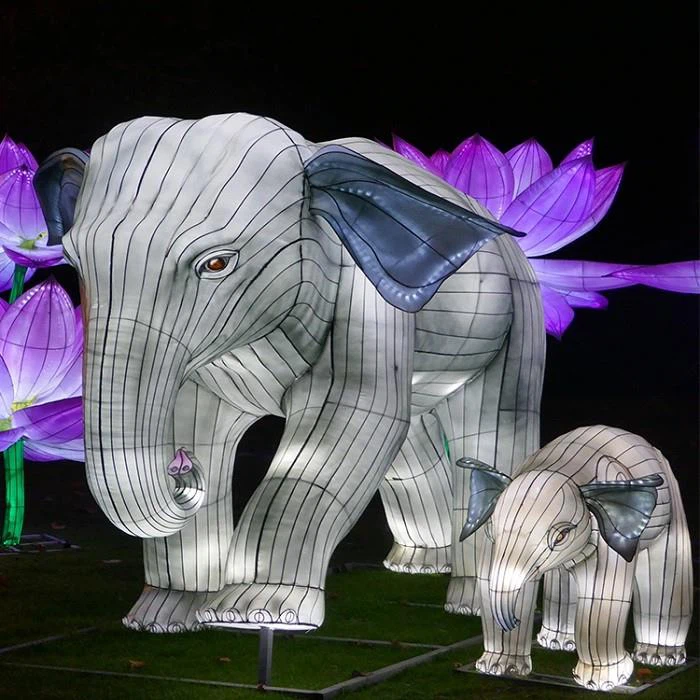
Spotlighting involves a narrow beam angle, usually less than 45 degrees. This pattern is used to highlight specific objects or areas. For instance, in a botanical garden, large outdoor lanterns with a spotlighting pattern can be used to draw attention to rare plants or sculptures. Our Colorful Chinese Handmade Animal Shape Lantern can be set up as a spotlight. The unique animal shapes can not only serve as eye - catching decorative elements but also direct a focused beam of light on a particular target, creating a dramatic and artistic lighting effect.
2.3 Wall - washing Pattern
Wall - washing is a pattern where the light is directed at a wall or vertical surface to create a smooth, even wash of light. This pattern is often used in architectural lighting to enhance the appearance of buildings. Large outdoor lanterns with a wall - washing pattern can be installed along the sides of buildings to highlight the texture and details of the walls. It can also be used in outdoor art galleries or museums to illuminate art installations on the walls.
2.4 Uplighting Pattern
Uplighting involves directing the light upwards, usually from the ground. This pattern is used to create a sense of drama and to highlight tall objects such as trees or statues. By shining light upwards, it can create interesting shadows and silhouettes, adding depth and dimension to the outdoor space. Our Lovely Panda Lanterns can be used in an uplighting setup. Placed at the base of a tree or a large structure, they can project a warm and inviting light upwards, enhancing the overall atmosphere of the area.
3. Factors Affecting Light Distribution Patterns
3.1 Lantern Design
The design of the lantern itself plays a significant role in determining the light distribution pattern. The shape of the lantern, the material used, and the presence of any reflectors or diffusers all affect how the light is emitted. For example, a lantern with a spherical shape may emit light more evenly in all directions, while a lantern with a conical shape may focus the light more towards the bottom. Reflectors can be used to redirect the light, increasing its intensity in a specific direction. Diffusers, on the other hand, can soften the light and make the distribution more uniform.
3.2 Light Source
The type of light source used in the lantern also impacts the light distribution. LED lights are commonly used in large outdoor lanterns due to their energy efficiency, long lifespan, and versatility. Different LED bulbs have different beam angles and light intensities. For instance, some LED bulbs are designed to produce a narrow, focused beam, while others are made for wide - spread illumination. Incandescent and halogen bulbs, although less commonly used in modern outdoor lanterns, also have their own characteristics in terms of light distribution.
3.3 Installation Height and Angle
The height at which the lantern is installed and the angle at which it is directed are crucial factors. Installing a lantern at a higher height can increase the coverage area, but it may also reduce the intensity of the light on the ground. The angle of installation determines the direction of the light. For example, if a lantern is installed at a downward angle, it will provide more illumination on the ground, while an upward - angled installation is suitable for uplighting applications.
4. Importance of Understanding Light Distribution Patterns for Our Customers
For event organizers, understanding light distribution patterns allows them to create the desired atmosphere for their events. Whether it's a romantic wedding in a garden or a lively outdoor concert, the right light distribution can enhance the mood and make the event more memorable. For landscape designers, it helps in creating beautiful and functional outdoor spaces. They can use different light distribution patterns to highlight the features of the landscape, such as water features, flower beds, or pathways.
Business owners also benefit from a good understanding of light distribution. For example, in a commercial outdoor area like a shopping mall entrance, proper lighting can improve visibility and safety for customers. It can also enhance the overall aesthetic appeal of the business, attracting more customers.
As a supplier of large outdoor lanterns, we are committed to providing our customers with detailed information about the light distribution patterns of our products. We offer a wide range of lanterns with different light distribution patterns to meet the diverse needs of our customers. Whether you need floodlighting for a large event, spotlighting for a special display, or wall - washing for an architectural project, we have the right lantern for you.
If you are interested in our large outdoor lanterns and would like to discuss your specific lighting requirements, please feel free to contact us for a detailed procurement discussion. We look forward to working with you to create the perfect outdoor lighting solution.
References
- IES Lighting Handbook, Illuminating Engineering Society.
- Lighting for Outdoor Spaces: Design and Application, various industry publications.