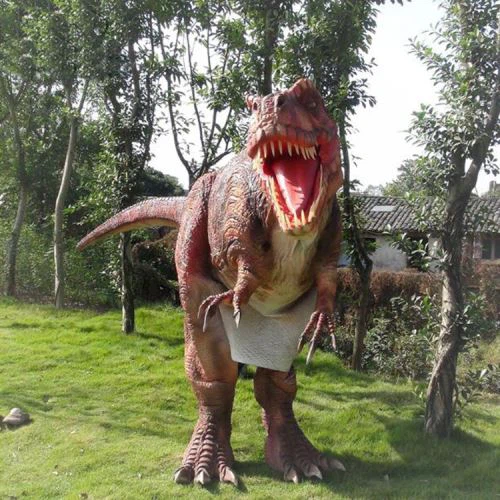
Ornithischian dinosaurs, a diverse and fascinating group that roamed the Earth during the Mesozoic Era, are known for their unique skeletal features. As a supplier of dinosaur skeletons, I have had the privilege of closely examining and understanding these remarkable anatomical structures. In this blog, we will explore the distinct characteristics of ornithischian dinosaur skeletons that set them apart from other dinosaur groups.


Pelvic Structure
One of the most defining features of ornithischian dinosaurs is their pelvic structure. Unlike saurischian dinosaurs, which have a lizard - like pelvis with a pubis bone that points forward, ornithischians have a bird - like pelvis. In ornithischians, the pubis bone points backward, parallel to the ischium. This arrangement is similar to that seen in modern birds, which is where the name "ornithischian" (meaning "bird - hip") comes from.
The backward - pointing pubis likely had several functions. It may have provided more space for the gut, allowing these dinosaurs to process large amounts of plant material, as most ornithischians were herbivores. It also could have affected the way they moved, perhaps giving them more stability and better balance while walking or running. This unique pelvic design is a key diagnostic feature that paleontologists use to identify ornithischian fossils.
Jaw and Teeth
Ornithischians had highly specialized jaws and teeth adapted to their herbivorous diet. Their jaws were often equipped with a horny beak at the front, which they used to clip off vegetation. Behind the beak, they had rows of closely packed teeth that were well - suited for grinding and chewing plant matter.
Some ornithischians, like the hadrosaurs, had dental batteries. These were complex structures consisting of hundreds of teeth that were stacked on top of and next to each other. As the outer teeth wore down, new teeth would grow in from the bottom to replace them. This continuous replacement of teeth allowed hadrosaurs to efficiently process tough plant materials throughout their lives.
The shape and arrangement of the teeth varied among different ornithischian groups. For example, ceratopsians, such as Triceratops, had large, triangular teeth with serrated edges that were excellent for slicing through fibrous plants. These specialized dental adaptations were crucial for ornithischians to obtain the necessary nutrients from the plants they consumed.
Armor and Ornamentation
Many ornithischian dinosaurs had various forms of armor and ornamentation on their bodies. Stegosaurs, for instance, were famous for their large, bony plates that ran along their backs. These plates were not only for protection but may also have played a role in thermoregulation or display. They could have helped the stegosaur release excess body heat or attract mates.
Ankylosaurs were another group known for their armor. They were covered in thick, bony scutes and spikes that provided excellent protection against predators. Some ankylosaurs even had a large, club - like structure at the end of their tails, which they could use as a powerful weapon to fend off attackers.
Ceratopsians also had elaborate ornamentation in the form of horns and frills. The frills were large, bony structures that extended from the back of the skull. They may have been used for protection, display, or to support the muscles used for chewing. The horns on ceratopsians, such as the long nasal horn of Triceratops, were likely used for combat with other members of the same species or for defense against predators.
Spinal Column and Posture
The spinal column of ornithischian dinosaurs had some unique characteristics. Many ornithischians had a relatively rigid spinal column, which gave them a more upright posture compared to some other dinosaur groups. This upright posture may have been beneficial for efficient movement and for supporting their large bodies.
Some ornithischians, like the iguanodontids, were capable of both bipedal (walking on two legs) and quadrupedal (walking on four legs) locomotion. Their spinal column and limb structure were adapted to allow for this flexibility in movement. The transition between bipedal and quadrupedal postures would have been useful for different activities, such as foraging on the ground or reaching higher vegetation.
Tail Structure
The tails of ornithischian dinosaurs also had distinct features. In some groups, the tail was long and heavy, which could have helped with balance. For example, the long tails of stegosaurs and ankylosaurs may have acted as counterweights to their large bodies, allowing them to move more smoothly.
Some ornithischians, like the hadrosaurs, had tails that were flattened from side to side. This tail shape may have been used for swimming or for propulsion in water, suggesting that these dinosaurs may have spent some time in aquatic environments. The tail of hadrosaurs was also an important part of their communication and social behavior. They could use their tails to signal to other members of their group or to display aggression.
Our Dinosaur Skeleton Offerings
As a supplier of dinosaur skeletons, we offer a wide range of high - quality products that showcase the unique features of ornithischian dinosaurs. Our Artificial Life Size Dinosaur Skeleton are crafted with meticulous attention to detail, accurately replicating the skeletal structures of these amazing creatures. These life - size skeletons are perfect for educational institutions, museums, and theme parks to provide an immersive experience for visitors.
We also have Attraction Dinosaur Skeleton For Museum that are designed to be the centerpiece of any museum exhibit. These skeletons are carefully assembled to highlight the key anatomical features of ornithischians, such as the unique pelvic structure, specialized jaws, and armor.
In addition, our Dinosaur Skeleton Model are ideal for collectors and enthusiasts. These models are available in various sizes and are made with high - quality materials to ensure durability and accuracy. Whether you are a paleontology student, a museum curator, or a dinosaur lover, our dinosaur skeleton products are sure to meet your needs.
Contact Us for Procurement
If you are interested in purchasing our dinosaur skeletons, we encourage you to contact us for procurement and further discussion. Our team of experts is ready to assist you in finding the perfect dinosaur skeleton for your specific requirements. We can provide detailed information about our products, including pricing, shipping, and customization options. Whether you are looking for a large - scale museum exhibit or a small collector's item, we have the expertise and resources to fulfill your order.
References
- Norman, D. B., Weishampel, D. B., & Witmer, L. M. (2004). The Dinosauria. University of California Press.
- Currie, P. J., & Padian, K. (Eds.). (1997). Encyclopedia of Dinosaurs. Academic Press.
- Sereno, P. C. (1999). The evolution of dinosaurs. Science, 284(5423), 2137 - 2147.