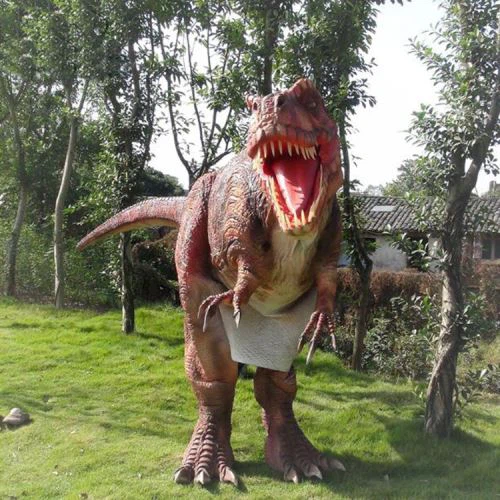
As a supplier of dinosaur skeletons, I've witnessed firsthand the intricate process of unearthing these prehistoric treasures. Excavating a large dinosaur skeleton is a complex and challenging endeavor that requires a combination of scientific expertise, physical labor, and a bit of luck. In this blog post, I'll explore some of the key challenges faced during the excavation of large dinosaur skeletons and how we overcome them to bring these remarkable fossils to life.
Geological Uncertainties
One of the primary challenges in dinosaur skeleton excavation is dealing with geological uncertainties. Dinosaur fossils are typically buried deep within the earth, often in layers of sedimentary rock that have accumulated over millions of years. These layers can be highly variable in terms of their composition, hardness, and stability, making it difficult to predict what lies beneath the surface.
For example, some sedimentary rocks may be soft and easily eroded, while others may be hard and require the use of heavy machinery to break through. Additionally, the presence of faults, fractures, or other geological features can further complicate the excavation process, as they can cause the rock to shift or collapse unexpectedly.
To overcome these challenges, our team of paleontologists and geologists conducts detailed geological surveys before beginning any excavation. These surveys help us to identify the location and extent of the fossil deposit, as well as the type of rock and soil conditions that we're likely to encounter. Based on this information, we develop a customized excavation plan that takes into account the specific geological challenges of the site.
Preservation and Fragmentation
Another significant challenge in excavating large dinosaur skeletons is preserving the fossils in their original state. Over time, the bones of dinosaurs can become fragmented, weathered, or damaged by natural processes such as erosion, sedimentation, and tectonic activity. Additionally, the weight of the overlying rock and soil can cause the bones to become compressed or distorted, making it difficult to reconstruct the skeleton accurately.
To minimize the risk of damage during excavation, our team uses a variety of specialized tools and techniques. For example, we often use small hand tools such as brushes, picks, and dental picks to carefully remove the surrounding rock and soil from the bones. This allows us to expose the fossils gradually and minimize the risk of accidentally breaking or damaging them.
In some cases, we may also use more advanced technologies such as 3D scanning and modeling to create detailed digital replicas of the fossils before they are removed from the site. These replicas can be used to study the structure and anatomy of the dinosaur in greater detail, as well as to assist in the reconstruction of the skeleton.
Logistics and Transportation
Excavating a large dinosaur skeleton is not only a scientific challenge but also a logistical one. Once the fossils have been carefully removed from the ground, they need to be transported safely and securely to a laboratory or museum for further study and preservation. This can be a complex and expensive process, especially if the excavation site is located in a remote or inaccessible area.
One of the main challenges in transporting large dinosaur skeletons is their size and weight. Some dinosaur bones can be several meters long and weigh hundreds or even thousands of kilograms, making them difficult to move without specialized equipment. Additionally, the fossils are often fragile and require careful handling to prevent damage during transportation.
To overcome these challenges, our team works closely with experienced logistics providers who specialize in the transportation of fragile and valuable artifacts. We use custom-designed crates and packaging materials to protect the fossils during transit, and we ensure that they are transported in climate-controlled environments to prevent damage from temperature and humidity fluctuations.


Scientific Collaboration and Interpretation
Finally, excavating a large dinosaur skeleton is not just about uncovering the fossils themselves but also about understanding their scientific significance. Once the fossils have been transported to the laboratory, they need to be carefully cleaned, prepared, and analyzed by a team of experts. This process can take several months or even years, depending on the complexity of the fossil and the research questions being addressed.
One of the key challenges in scientific collaboration and interpretation is integrating the findings from different disciplines. Paleontologists, geologists, biologists, and other scientists all bring different perspectives and expertise to the study of dinosaurs, and it can be challenging to reconcile these different viewpoints and develop a comprehensive understanding of the fossil record.
To address this challenge, our team works closely with a network of international scientists and researchers to share data, collaborate on research projects, and exchange ideas. We also participate in scientific conferences and workshops to stay up-to-date on the latest research findings and to present our own work to the scientific community.
Conclusion
Excavating a large dinosaur skeleton is a complex and challenging endeavor that requires a combination of scientific expertise, physical labor, and a bit of luck. From dealing with geological uncertainties and preserving the fossils to transporting them safely and interpreting their scientific significance, there are many challenges that need to be overcome along the way.
At our company, we're committed to providing our customers with the highest quality dinosaur skeletons and fossils, and we take great pride in our work. Whether you're a museum curator, a collector, or a science enthusiast, we invite you to explore our collection of Highly Life-like And Emulational Dinosaur Skeleton, Dinosaur Skeleton Model, and Replica Dinosaur Fossils. If you have any questions or would like to discuss a potential purchase, please don't hesitate to contact us. We look forward to hearing from you!
References
- Benton, M. J. (2015). Vertebrate Paleontology. Wiley-Blackwell.
- Currie, P. J., & Padian, K. (Eds.). (1997). Encyclopedia of Dinosaurs. Academic Press.
- Prothero, D. R. (2013). Bringing Fossils to Life: An Introduction to Paleobiology. Columbia University Press.