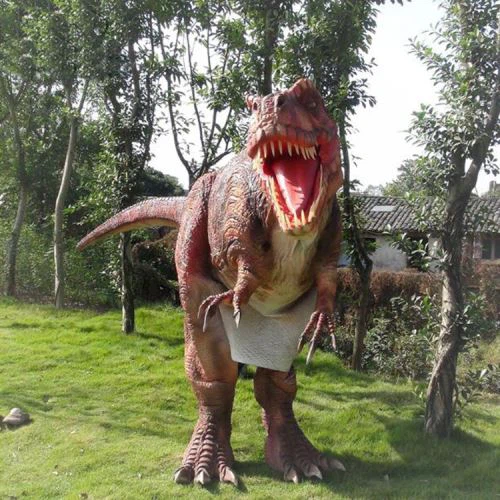
A walking dinosaur costume is a fascinating creation that combines artistry, engineering, and a touch of prehistoric magic. As a supplier of these incredible costumes, I often get asked about how they move. In this blog post, I'll take you behind the scenes to explore the mechanics and technology that make a walking dinosaur costume come to life.


The Basics of Movement
At the core of a walking dinosaur costume is a system that allows the wearer to control its movement. This system typically consists of a combination of mechanical parts, motors, and sensors. The goal is to mimic the natural gait and movements of a real dinosaur as closely as possible.
One of the key components of a walking dinosaur costume is the frame. The frame provides the structure and support for the costume, and it is designed to be lightweight yet durable. It is usually made of materials such as aluminum or fiberglass, which are strong enough to withstand the weight of the costume and the movements of the wearer.
The frame is connected to a set of joints and actuators that allow the costume to move. These joints are designed to mimic the natural movement of a dinosaur's limbs, allowing the costume to walk, run, and even turn. The actuators are responsible for powering the joints and controlling their movement. They can be powered by electricity, hydraulics, or pneumatics, depending on the design of the costume.
The Role of the Wearer
While the mechanical components of a walking dinosaur costume are essential for its movement, the role of the wearer cannot be overstated. The wearer is the one who controls the costume's movements, using a combination of body movements and controls.
To operate a walking dinosaur costume, the wearer typically stands inside the costume and uses their legs to control the movement of the costume's legs. By shifting their weight and moving their legs in a specific pattern, the wearer can make the costume walk forward, backward, or turn. Some costumes also have additional controls, such as buttons or levers, that allow the wearer to control other functions of the costume, such as opening and closing the mouth or moving the tail.
In addition to controlling the movement of the costume, the wearer also plays a crucial role in bringing the dinosaur to life. By using their body language and facial expressions, the wearer can add personality and realism to the costume. They can make the dinosaur look angry, scared, or curious, depending on the situation.
The Technology Behind the Movement
In recent years, advancements in technology have made it possible to create walking dinosaur costumes that are more realistic and lifelike than ever before. One of the key technologies used in these costumes is animatronics. Animatronics is the use of mechanical devices and electronics to create realistic movements and expressions in a character or object.
In a walking dinosaur costume, animatronics can be used to control the movement of the costume's limbs, head, and tail. For example, a motorized servo can be used to control the movement of the costume's jaw, allowing it to open and close in a realistic manner. Sensors can also be used to detect the movement of the wearer and adjust the movement of the costume accordingly.
Another technology that is often used in walking dinosaur costumes is sound effects. Sound effects can add an extra layer of realism to the costume, making it more immersive and engaging for the audience. For example, a sound system can be installed inside the costume to play the sounds of a real dinosaur, such as roars, growls, and footsteps.
Different Types of Walking Dinosaur Costumes
There are several different types of walking dinosaur costumes available on the market, each with its own unique features and capabilities. Some of the most popular types of walking dinosaur costumes include:
- Realistic Dinosaur Costume: These costumes are designed to look as realistic as possible, with detailed skin textures, accurate colors, and lifelike movements. They are often used in movies, television shows, and theme parks. You can find high-quality Realistic Dinosaur Costume on our website.
- Animatronic Dinosaur Costume: These costumes use animatronics technology to create realistic movements and expressions. They are often more expensive than other types of walking dinosaur costumes, but they offer a higher level of realism and interactivity. Check out our Animatronic Dinosaur Costume for a truly immersive experience.
- T Rex Dinosaur Costume: The T Rex is one of the most iconic dinosaurs of all time, and a T Rex dinosaur costume is a popular choice for parties, events, and cosplay. These costumes typically feature a large, powerful body, sharp teeth, and a menacing roar. Explore our T Rex Dinosaur Costume to unleash your inner predator.
Conclusion
In conclusion, a walking dinosaur costume is a complex and fascinating creation that combines artistry, engineering, and technology. By using a combination of mechanical parts, motors, sensors, and the skills of the wearer, these costumes can mimic the natural movements and behaviors of a real dinosaur. Whether you're looking for a realistic dinosaur costume for a movie or a fun and interactive costume for a party, there is a walking dinosaur costume out there that is perfect for you.
If you're interested in purchasing a walking dinosaur costume or have any questions about our products, please don't hesitate to contact us. We would be happy to discuss your needs and help you find the perfect costume for your event.
References
- "Animatronics: The Art and Science of Creating Lifelike Characters." by David A. F. Rose.
- "The Dinosaurs: A Concise Natural History." by Donald R. Prothero.
- "Costume Design: History, Theory, and Practice." by Ann Van Meter.