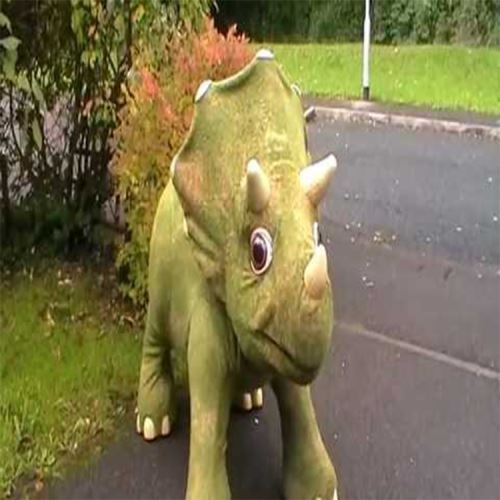
Dinosaur rides have long captivated the imagination of people of all ages, offering a thrilling and immersive experience that transports riders back to the prehistoric era. As a leading supplier of dinosaur rides, we are constantly fascinated by the intricate technology that brings these ancient creatures to life. In this blog, we will delve into the various technological aspects behind dinosaur rides, exploring how advanced engineering, electronics, and software combine to create a realistic and engaging experience.
Mechanical Design and Engineering
At the heart of every dinosaur ride is a carefully engineered mechanical structure that mimics the movements of real dinosaurs. The design process begins with extensive research into the anatomy and locomotion of different dinosaur species. Paleontologists and biomechanics experts provide valuable insights into the natural movements of dinosaurs, which are then translated into mechanical systems.
The frames of our dinosaur rides are typically constructed using high - strength steel or aluminum alloys. These materials offer a good balance between durability and weight, ensuring that the rides can withstand the rigors of daily use while remaining relatively lightweight for ease of installation and operation. The skeletal structure is designed to replicate the joints and articulations of real dinosaurs, allowing for a wide range of movements.
For example, in our Walking Dinosaur Ride, the legs are equipped with sophisticated linkages and actuators that mimic the gait of dinosaurs. Hydraulic or electric motors are used to power the movement of the legs, enabling the dinosaur to walk, turn, and even stop with a high degree of realism. The suspension system is also carefully calibrated to absorb shock and provide a smooth ride for the passengers.
Electronics and Control Systems
To control the complex movements of a dinosaur ride, advanced electronics and control systems are essential. These systems are based on a combination of sensors, microcontrollers, and actuators.
Sensors play a crucial role in detecting the position and movement of different parts of the dinosaur. For instance, gyroscopes and accelerometers are used to measure the orientation and acceleration of the body, allowing the control system to adjust the movements of the legs and other appendages accordingly. Proximity sensors are also used to detect the presence of obstacles or passengers, ensuring safe operation.
Microcontrollers act as the "brain" of the dinosaur ride, processing the data from the sensors and sending commands to the actuators. The software running on the microcontroller is carefully programmed to replicate the natural behavior of dinosaurs. It takes into account factors such as the speed of movement, the sequence of steps, and the response to external stimuli.
Actuators are responsible for converting the electrical signals from the control system into physical movement. As mentioned earlier, hydraulic or electric motors are commonly used as actuators in dinosaur rides. Hydraulic actuators offer high force and smooth operation, making them suitable for large - scale, heavy - duty movements. Electric actuators, on the other hand, are more precise and energy - efficient, and are often used for smaller, more delicate movements.
Audio and Visual Technologies
To enhance the immersive experience of a dinosaur ride, audio and visual technologies are employed. Realistic dinosaur sounds are an essential part of the experience, as they help to create a sense of presence in the prehistoric world. High - quality sound systems are installed inside the dinosaurs, playing pre - recorded roars, growls, and other vocalizations.
These sound effects are carefully synchronized with the movements of the dinosaurs. For example, when the dinosaur opens its mouth to roar, the corresponding sound is played at the same time. The sound system also includes speakers placed around the ride area to create a 360 - degree audio environment, making the experience even more immersive.
Visual effects are also used to add to the realism of the dinosaur rides. Some of our rides feature animatronic eyes that can blink and look around, giving the dinosaurs a more lifelike appearance. In addition, LED lighting can be used to create realistic skin tones and to simulate the effects of sunlight and shadow.
In our Artificial Dinosaur - ride, we use projection mapping technology to project realistic textures and patterns onto the surface of the dinosaurs. This technology can create the illusion of scales, feathers, or other skin features, making the dinosaurs look even more authentic.
Safety Systems
Safety is of utmost importance in the design and operation of dinosaur rides. A comprehensive set of safety systems is implemented to protect both the passengers and the operators.
Emergency stop buttons are installed at multiple locations around the ride area, allowing operators to quickly stop the ride in case of an emergency. Safety sensors are also used to detect any abnormal movements or malfunctions in the ride. For example, if a leg of the dinosaur is not moving properly, the safety system will detect the anomaly and automatically shut down the ride.
The ride structure is designed to withstand a certain amount of force and stress. Rigorous testing is conducted to ensure that the ride can safely support the weight of the passengers and the forces generated during operation. Protective barriers and enclosures are also installed around the ride area to prevent passengers from getting too close to moving parts.
Maintenance and Upkeep
Regular maintenance is essential to ensure the long - term performance and safety of dinosaur rides. Our team of technicians is trained to perform routine inspections, cleaning, and repairs on the rides.
The mechanical components, such as the motors, gears, and linkages, need to be lubricated and checked for wear and tear on a regular basis. The electronics and control systems also require periodic calibration to ensure accurate operation. In addition, the audio and visual systems need to be maintained to ensure high - quality sound and visual effects.
We also offer software updates for our dinosaur rides. These updates can improve the performance of the control system, add new features, or enhance the realism of the movements and sounds. By keeping the rides up - to - date with the latest technology, we can ensure that our customers always have access to the most exciting and immersive dinosaur ride experiences.


Why Choose Our Dinosaur Rides?
As a leading dinosaur ride supplier, we have a wealth of experience in designing, manufacturing, and installing high - quality dinosaur rides. Our rides are known for their realistic appearance, smooth movements, and engaging experiences.
We use the latest technologies in mechanical design, electronics, audio, and visual effects to create dinosaur rides that are truly one - of - a - kind. Our commitment to safety means that our rides meet the highest industry standards, giving our customers peace of mind.
Whether you are looking for a Ride On Dinosaur for a theme park, a museum exhibit, or a private event, we have the perfect solution for you. Our team of experts can work with you to customize the ride to meet your specific requirements, ensuring that it fits seamlessly into your venue.
If you are interested in purchasing a dinosaur ride for your business or event, we invite you to contact us for a consultation. We can provide you with detailed information about our products, including pricing, installation, and maintenance services. Our friendly and knowledgeable sales team is ready to answer all of your questions and help you make the right decision.
References
- Carter, R. S. (2015). Engineering Marvels: The Technology Behind Theme Park Rides. CRC Press.
- Currie, P. J., & Padian, K. (2010). Encyclopedia of Dinosaurs. Academic Press.
- Gunga, H. C., & Röhrle, O. (2014). Biomechanics of Dinosaurs: From Terrestrial to Aquatic Locomotion. Springer.